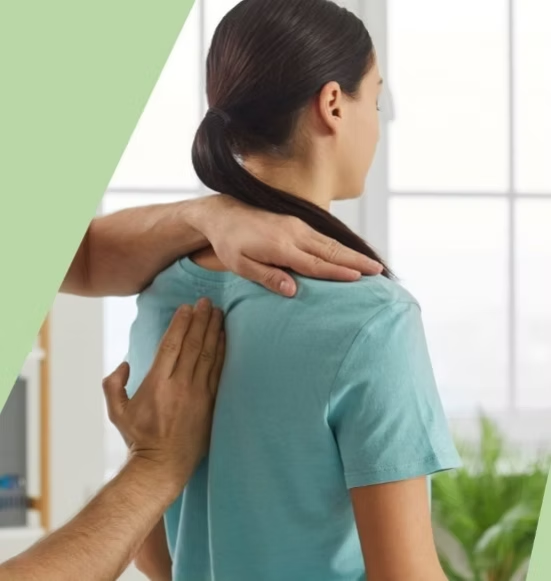
Life gets busy, and physical discomfort has a way of becoming background noise. You adapt and push through until the problem becomes impossible to ignore. The trouble is, your body sends signals long before things reach that point. Learning to read them early makes a significant difference to how quickly you recover and how well you feel day to day.
Here are four signs your body is asking for a massage near me.
1. Your Muscles Have Been Tight for Days
Muscle tightness that lingers well past a workout or a stressful week is your body’s way of waving a flag. A muscle that stays contracted without releasing is a muscle that’s accumulating tension, restricting blood flow, and pulling on surrounding structures. If your shoulders feel like concrete or your lower back hasn’t loosened up in days despite rest, massage is the most direct route to breaking that cycle.
2. You’re Getting Headaches Regularly
Frequent headaches, particularly those that start at the base of the skull or radiate from the neck and shoulders, are often tension-driven rather than neurological. When these muscles stay tight, they restrict circulation and create referred pain that travels straight to the head. Massage targets these muscles directly, and many people find that regular sessions reduce headache frequency in a way that painkillers simply mask.
3. Your Sleep Has Taken a Hit
Poor sleep and physical tension feed each other in a frustrating loop. A body carrying muscular tightness, increased cortisol, and an overactive nervous system struggles to settle into the deep, restorative sleep stages where real recovery happens. Massage lowers cortisol, activates the parasympathetic nervous system, and releases the muscular bracing that keeps the body in a low-level state of alertness through the night. Many clients report noticeably deeper sleep in the days following a session.
4. You’re Moving Differently Than Usual
Pay attention to how you move. Are you favouring one side when you walk? Rolling your shoulder forward to avoid discomfort? Turning your whole body instead of just your neck? These small compensatory movements are the body’s way of protecting an area of tension or restriction, and left unaddressed, they create secondary problems in surrounding muscles and joints. Massage releases the original source of restriction, allowing the body to return to its natural movement patterns before those compensations have time to become habits.